The 6:30 PM Meeting: Schedules Ignore Women's Safety
When the meeting runs late, men plan a commute; women run a threat assessment. The scheduling bias that quietly excludes women from the room.
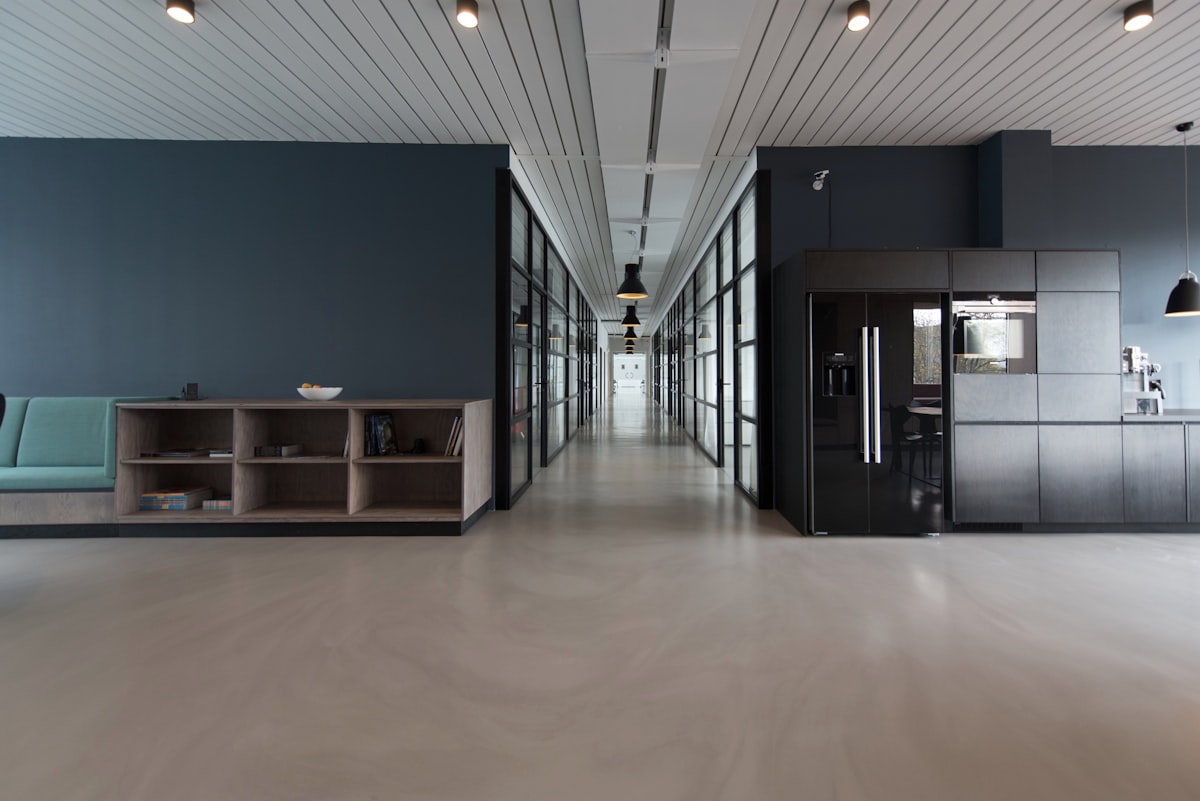
The email arrives at 4:57 PM. A team meeting has been called for 6:30 PM. It will run until at least 8:00 PM. For the men in the office, this is an inconvenience—a delayed commute, a missed dinner. For the women, it triggers a cascade of calculations: Who will walk me to my car? Is the parking lot lit? Can I call an auto before the office security guard leaves? Will my phone battery last until I reach home?
Corporate night safety policies are among the most visible manifestations of the gap between institutional rhetoric and lived reality. Companies invest in elaborate safety protocols—GPS-tracked cabs, emergency helplines, buddy systems for late departures—while the fundamental architecture of the workplace and its surroundings remains unchanged. The policy document promises safety; the walk to the parking lot delivers something else entirely.
The Policy-Practice Divide
Indian corporations have, in recent years, developed increasingly sophisticated workplace safety policies. The Sexual Harassment of Women at Workplace (Prevention, Prohibition and Redressal) Act, 2013, mandated Internal Complaints Committees (ICCs) in all organizations with more than ten employees. Many companies have expanded these requirements to include late-night safety protocols, emergency response systems, and transportation provisions.
"Our company has a 47-page safety policy. It covers every scenario except the one I face every Thursday night: the walk from the sixth floor to the basement parking garage, through a corridor that is empty, dimly lit, and has no camera." — Corporate professional, Pune
The gap between policy and practice is not merely an implementation failure; it is a structural feature of corporate safety planning. Policies are designed by committees that meet during business hours, in conference rooms with adequate lighting and security. The experience of leaving the office at 10 PM, of walking through deserted corridors, of waiting alone for a cab in an unlit driveway—these are not experiences that feature in policy drafts.
The buddy system, a common component of night safety policies, illustrates this gap. The policy assumes that colleagues will be willing and available to accompany women to their vehicles or transport stops. In practice, colleagues leave at different times, have their own commutes to manage, and may not be available when needed. The buddy system places the burden of safety coordination on women, who must arrange accompaniment in advance—an additional layer of logistical labor that their male colleagues do not perform.
The Architecture of Danger
The physical design of workplaces and their surroundings often contradicts safety policies. Parking garages with blind spots, stairwells without cameras, corridors that connect buildings through unlit passages, exit doors that open onto isolated streets—these architectural features create environments where violence is possible and detection is unlikely.
Corporate real estate decisions prioritize cost efficiency, aesthetic appeal, and space optimization over safety considerations. The result is workplaces that may be secure during business hours—when reception desks are staffed, corridors are populated, and parking lots are busy—but that transform into threatening environments after dark.
"The building has security guards at the front entrance from 8 AM to 8 PM. After 8 PM, the front entrance is locked and the guards move to a side door. The parking garage has no guard at any hour. It has cameras, but I have been told they are not monitored in real time. They record, but no one watches." — IT professional, Hyderabad
The lighting of workplace environments is a particular concern. Studies of workplace safety have consistently found that adequate lighting is one of the most effective deterrents to criminal behavior. Yet many Indian offices economize on after-hours lighting, leaving stairwells, parking structures, and connecting passages in partial darkness. The energy savings from reduced lighting are trivial compared to the safety costs, but the calculation is rarely made in those terms.
The Security Guard Paradox
Workplace security personnel occupy an ambiguous position in the safety landscape. They are present to provide security, yet their authority, training, and resources are often insufficient to address the safety concerns of women employees. Security guards may be poorly paid, minimally trained, and socially positioned in ways that limit their effectiveness as protectors.
"The security guard at our office is a man in his sixties. He is kind and well-meaning. But he cannot walk me to my car because he needs to stay at the gate. He cannot accompany me to the auto stand because there is no one to replace him. He can call the police, but by the time they arrive, anything could have happened." — Media professional, Delhi
The paradox deepens when we consider that security guards themselves may be sources of discomfort for women employees. Reports of inappropriate comments, unwanted attention, and boundary violations by security personnel are not uncommon, though they are rarely formally reported. The person tasked with ensuring safety becomes, in some cases, a source of the very anxiety that safety measures are meant to address.
Corporate security planning often focuses on external threats—break-ins, theft, unauthorized entry—while neglecting the internal dynamics that affect women's safety. The threat that women face in workplace environments is rarely a stranger breaking in; it is more often a colleague, a supervisor, or the structural conditions of the built environment itself. Security policies that address only external threats miss the majority of safety concerns that women experience.
The Economic Cost of Night Work for Women
The safety challenges of night work have direct economic consequences for women. Women who decline late meetings or early morning sessions due to safety concerns may be perceived as less committed, less ambitious, less promotable. The "flexibility penalty"—the career cost of prioritizing safety—falls disproportionately on women, reinforcing gender hierarchies in the workplace.
"I was passed over for a project because I could not commit to late-night calls with the US team. My male colleague, who has a wife at home managing everything, could. My safety concerns were not considered a valid reason for limited availability. They were considered an excuse." — Finance professional, Mumbai
The economic calculation is cruel: women must choose between career advancement and physical safety, a choice that men are rarely required to make. The structural conditions that make night work unsafe for women—poorly lit parking, inadequate security, unreliable transportation—are not inevitable. They are the result of specific choices about resource allocation, facility management, and organizational priorities.
Corporate diversity and inclusion initiatives frequently address gender representation in leadership, pay equity, and parental leave. Safety at night is often absent from these conversations, treated as an operational matter rather than a diversity issue. Yet the inability of women to participate fully in night-time work activities is a direct contributor to gender inequality in the workplace.
Toward Genuine Workplace Safety
Genuine workplace safety for women requires more than policy documents. It demands a fundamental rethinking of how workplaces are designed, managed, and experienced after hours.
This means investing in physical infrastructure—adequate lighting, real-time monitored CCTV systems, secure parking with attendant presence, well-lit pathways connecting buildings to transportation hubs. It means providing reliable, GPS-tracked transportation that does not require women to wait in isolated locations. It means training security personnel not only in procedural responses but in trauma-informed interaction with women employees.
"Safety is not a perk. It is not a benefit that can be offered or withdrawn at management's discretion. It is a condition of employment, and the employer bears the responsibility for providing it." — Labor rights advocate
It also means cultural change within organizations. Late-night meetings should be scheduled with awareness of their safety implications. Colleagues should be encouraged—not merely permitted—to accompany women colleagues to their vehicles. Managers should recognize that safety concerns are legitimate professional considerations, not personal limitations.
The walk to the car is not a trivial moment. It is a moment when corporate rhetoric meets physical reality, when policy documents encounter dark parking garages, when the promise of safety is tested against the lived experience of women navigating environments that were not designed with their safety in mind. Who walks you to your car? The answer to that question reveals more about an organization's commitment to gender equity than any diversity statement ever could.
Related Feminist Essays
#Safety
Solitary Midnight Stroll: Reclaiming Indian Streets
Reflections on why safety is not merely the absence of violence, but the freedom to walk unhurried without fear or permission.
By Anonymous Writer • 5 min read • Read Essay →
#Safety
Consent Is Continuous — Not a Checkbox Before Sex
Unpacking rape culture’s myths: silence is not yes, marriage is not perpetual consent, and intoxication is not an invitation.
By Anonymous • 5 min read • Read Essay →
#Safety
The Vigilance Commute: Cities Built Against Women
Every morning, women run an invisible calculation of threats and escape routes — the mental map that makes a commute a gendered negotiation of safety.
By Priya Venkatesh • 12 min read • Read Essay →
Feminist Files
Editorial Publication
Browse all essays · Enable JavaScript for likes, responses, and the full experience.