The Night Shift Tax: Working Women After Dark
For women who work after dark, fear is a permanent companion and an unacknowledged cost of the job. The hidden price of the night-shift economy.
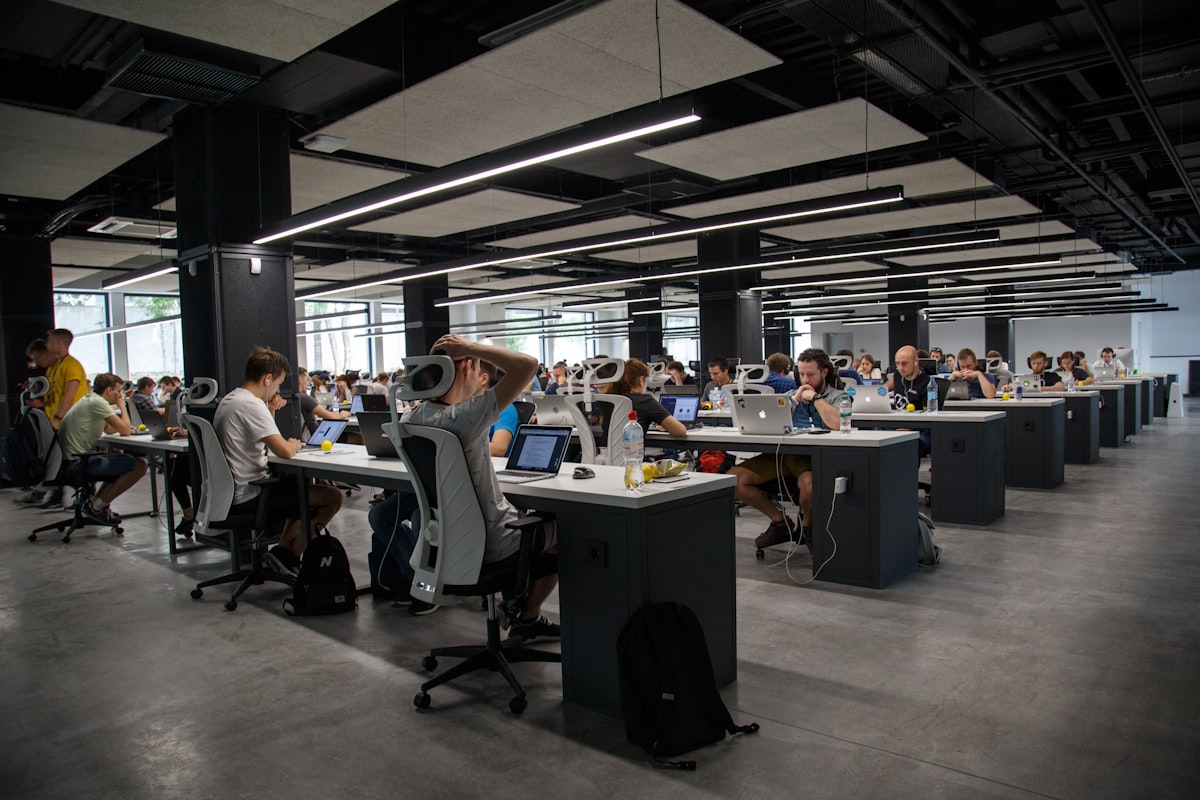
When the office lights dim at 6 PM, a different workforce stirs. Night shift workers—call center agents, hospital staff, factory workers, security personnel, journalists—begin their labor in a world that has been designed, policed, and perceived as hostile to women after dark. For women in the night shift, fear is not an occasional inconvenience. It is a permanent companion, an unacknowledged component of their labor, a tax on their participation in the economy.
The night shift has long been associated with masculine domains—the factory floor, the construction site, the security booth. Women's entry into these spaces has been hard-won, often facilitated by economic necessity rather than genuine inclusion. And the price of that inclusion, for many women, is the daily negotiation with danger that begins the moment they step out of their homes and continues until they return, exhausted, to the relative safety of domestic space.
The Commute as Labor
For night shift workers, the commute itself constitutes labor—the unpaid, unrecognized labor of self-protection. Women leaving work at midnight or 3 AM face a landscape stripped of the informal surveillance that daylight provides. Streets are empty. Public transport is sparse. Auto-rickshaw drivers and taxi operators may be the only other humans present, and their intentions are unknown.
"My employer pays me for eight hours of work. They do not pay for the two hours of anxiety before my shift—the planning, the route-checking, the sending of location shares. They do not pay for the vigilance on the journey home. But that labor is real, and it is exhausting." — Night shift worker, IT sector, Bangalore
The gendered geography of night-time urban space is well documented. Research by the Jagori women's organization in Delhi found that women's perception of safety drops dramatically after 8 PM, with the decline accelerating sharply after 10 PM. Streets that feel navigable during the day become threatening at night—not because women are inherently afraid of the dark, but because the dark conceals the predators and the absence of witnesses that enable violence.
Employers who require night shift work have a responsibility to address the safety implications of that requirement. Yet many treat the commute as the worker's personal problem, outside the scope of employment obligations. This framing ignores the reality that the commute is a necessary consequence of the job, and its dangers are a direct result of the schedule imposed by the employer.
The Workplace After Dark
The night shift workplace itself presents particular challenges. Offices may be partially staffed, with security reduced to skeleton crews. Factory floors operate with fewer supervisors. Hospital corridors, while ostensibly secure, harbor their own dangers—aggressive patients, isolated wings, poorly lit parking structures.
Women night shift workers report higher rates of harassment from colleagues and supervisors during night hours. The reduced oversight, the absence of senior management, and the culture of "night shift camaraderie" can create environments in which boundaries are blurred and accountability is diminished. Sexual harassment that might be witnessed and addressed during the day occurs in the shadows of the night shift, where victims fear not being believed and perpetrators exploit the isolation.
"During the day, there are cameras, there are people, there is the HR department. At night, it is just you and whoever decides to approach you. The rules feel different when the office is empty." — Anonymous hospital worker, Mumbai
The Indian Supreme Court's Vishaka guidelines and subsequent Sexual Harassment of Women at Workplace Act, 2013, technically apply regardless of the hour. But the practical mechanisms of complaint and redress are designed for daytime workplaces with established hierarchies and visible oversight. Night shift workers face structural barriers to reporting—barriers compounded by the precarious nature of many night shift positions, where job loss is an ever-present threat.
The Body at Night
The physical toll of night shift work is well documented—disrupted circadian rhythms, increased risk of cardiovascular disease, metabolic disorders, mental health challenges. For women, these health effects are compounded by the stress of navigating unsafe environments. The body that is already stressed by inverted sleep patterns is further taxed by the adrenaline of hypervigilance.
Research published in the Journal of Occupational Health Psychology found that women night shift workers reported significantly higher levels of cortisol (the stress hormone) than their male counterparts, even when performing identical tasks. The researchers attributed this disparity to the additional cognitive and emotional labor of safety management that women perform throughout their shifts.
The health impacts extend beyond the physical. Women night shift workers report higher rates of anxiety, depression, and post-traumatic stress symptoms. These mental health effects are both consequences of and contributors to the cycle of fear—the anxious worker is more vigilant, which increases cortisol, which exacerbates anxiety. Breaking this cycle requires not individual coping strategies but structural change in how night work is organized, supervised, and compensated.
The Economic Trap
For many women, night shift work is not a choice but an economic necessity. Night shifts often pay premium rates—15% to 30% above daytime wages—making them attractive to workers supporting families on single incomes. The gender pay gap means that women are disproportionately likely to accept night shifts for the financial premium, even at the cost of their safety and health.
This creates what feminist economists call a "safety premium trap"—women accept dangerous conditions because the economic alternative is worse. The premium paid for night work is, in effect, compensation for the risk and fear that accompany it. It is hazard pay, though it is not labeled as such, and it does not include the health costs that accumulate over years of night shift labor.
"I do the night shift because it pays more. My son needs school fees, my mother needs medicine. The extra money is not luxury—it is survival. But the fear is also survival. Every night, I survive twice: once through the work, and once through the journey." — Garment factory worker, Tirupur
The gig economy has intensified this trap. Women who work as night-time delivery partners, ride-hailing drivers, or customer service representatives face the compound vulnerability of economic precarity and physical danger. Platform companies classify these workers as independent contractors, distancing themselves from responsibility for safety during night hours. The worker bears all the risk; the platform captures all the profit.
Toward Night Labor Justice
The feminist response to the labor of being fearful is not to remove women from night shifts—that would reinforce the exclusion that feminism seeks to dismantle. Instead, it demands that the costs of night work be genuinely shared, not disproportionately borne by women.
This means employer accountability for safe commutes—provided transportation, paid travel time, GPS-tracked vehicles with emergency response capabilities. It means workplace environments designed for night safety—adequate lighting, visible security, functional communication systems, and zero tolerance for harassment regardless of the hour. It means legal frameworks that recognize night-specific risks and mandate specific protections.
"If a company requires a woman to be at her desk at 10 PM, it must also guarantee she gets home safely at 6 AM. The obligation does not end when the shift ends." — Advocate Flavia Agnes, women's rights lawyer
It also means challenging the cultural narratives that treat night work as morally suspect for women. The question "What kind of woman works at night?" reveals more about the问者's misogyny than about the worker's character. The answer is: the same kind of woman who works during the day—someone who needs to earn a living, who has skills to contribute, who deserves to move through the world without fear, regardless of the hour.
The labor of being fearful is invisible, but it is real. It is a cost borne by women workers and subsidized by their silence. Making it visible—naming it, measuring it, demanding compensation and protection for it—is an essential step toward a labor movement that takes women's full experience of work seriously. Not just the work itself, but the fear that surrounds it, the energy it consumes, and the toll it exacts on bodies and minds that are already asked to give too much.
Related Feminist Essays
#Safety
Solitary Midnight Stroll: Reclaiming Indian Streets
Reflections on why safety is not merely the absence of violence, but the freedom to walk unhurried without fear or permission.
By Anonymous Writer • 5 min read • Read Essay →
#Safety
Consent Is Continuous — Not a Checkbox Before Sex
Unpacking rape culture’s myths: silence is not yes, marriage is not perpetual consent, and intoxication is not an invitation.
By Anonymous • 5 min read • Read Essay →
#Safety
The Vigilance Commute: Cities Built Against Women
Every morning, women run an invisible calculation of threats and escape routes — the mental map that makes a commute a gendered negotiation of safety.
By Priya Venkatesh • 12 min read • Read Essay →
Feminist Files
Editorial Publication
Browse all essays · Enable JavaScript for likes, responses, and the full experience.